
Farmers Helping Farmers
Steve Hansen, Co-Founder, Educate Tanzania
Farmers in Minnesota are helping farmers in Tanzania.
One bushel of soybeans weighs 60 pounds. How do I know? I looked it up. But also, my back felt it as I shoveled about 75 bushels in the early 1980’s. My new wife, Jan, and I were visiting a friend in my hometown in Southern Minnesota, when we noticed a tipped wagon in a ditch. My friend, Randy’s wagonload of soybeans had tipped as he hauled to town. Doing the math, I figured that I shoveled over a ton of “spilled beans” before the guys from the grain elevator arrived with a vacuum to finish the job. Oh, and my new wife, Jan, was by my side shoveling a similar amount. As a Minnesota farmgirl - she’d done it before.
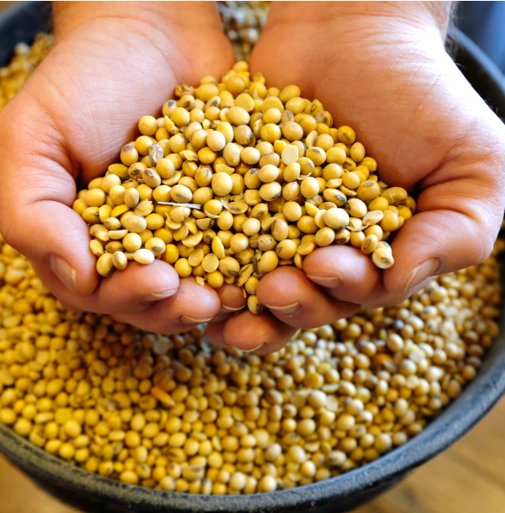
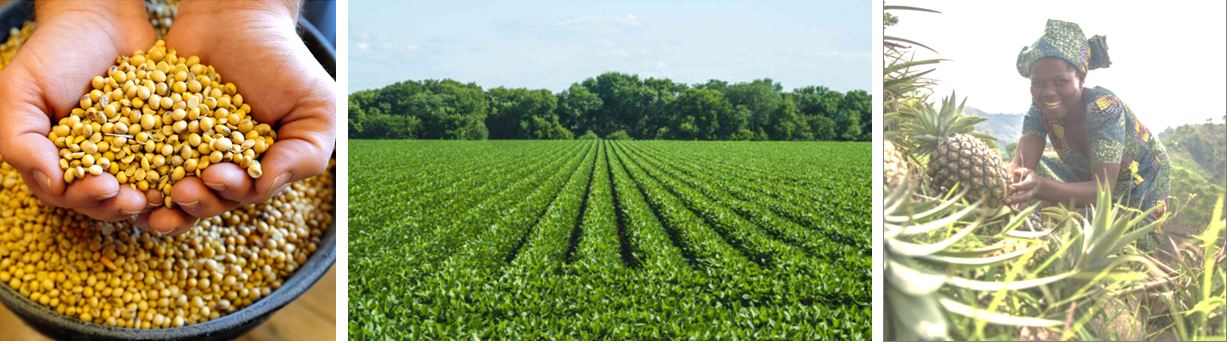
A bushel of soybeans is equivalent to about 10 gallons or (2) 5-gallon buckets, and is currently (August 9, 2026) worth $11.50 at market price.
So, why am I going on about soybeans when our partners in Tanzania are building a pineapple processing plant? Shouldn’t I be talking about pineapple and all the value-added products and income that will help the community? And here I am talking about soybeans.
Well, they’re connected so let’s talk about both.
The “spilled beans” incident took place in the early 1980’s. Fast forward about 45 years. In mid-July of this year (2026), Educate Tanzania (ETI) applied for and were approved to set up an account at a local grain elevator to accept farmers’ “Gifts of Grain”. The idea is that when farmers head to the Central United Cooperative with their grain, they transfer ownership of a designated number of bushels directly to a nonprofit organization such as ETI before the grain is sold. ETI then sells the grain and converts those farmers’ gifts to cash. There are benefits of reduced tax for the farmers and increased cash proceeds for the nonprofits.

Gifts of Grain
No sooner had ETI set this up, when our friend, Randy, the very same farmer whose load of soybeans tipped 45 years ago, along with his wife, Pam, became the very first to help other farmers in Tanzania by donating a portion of the soybean harvest to ETI.
There is only one first.
Randy and Pam from Sleepy Eye, Minnesota, are the very first to share some of their bountiful harvest with ETI and consequently, with farmers in Karagwe, Tanzania.

Thank you, Randy and Pam!
FARMERS HELPING FARMERS
Randy and Pam are helping pineapple farmers in Tanzania by sharing some of their soybean harvest. I can’t help but be mindful of all the examples from my own small-town upbringing. Farmers helping farmers. Many of you have followed ETI and know that Jan was raised on a farm as one of four daughters helping plant, cultivate, weed and harvest grain. At one point in the fall of 1988, when Jan’s dad was sick, his friends and neighbors gathered to harvest his entire crop, took the grain to the elevator or stored it in the bins, and made sure that everything was done just right so Dick could rest easier. In fact, his farming buddies set up a lawn chair out by his fields so Dick could watch as load after load was harvested and sold or stored. Farmers helping farmers.
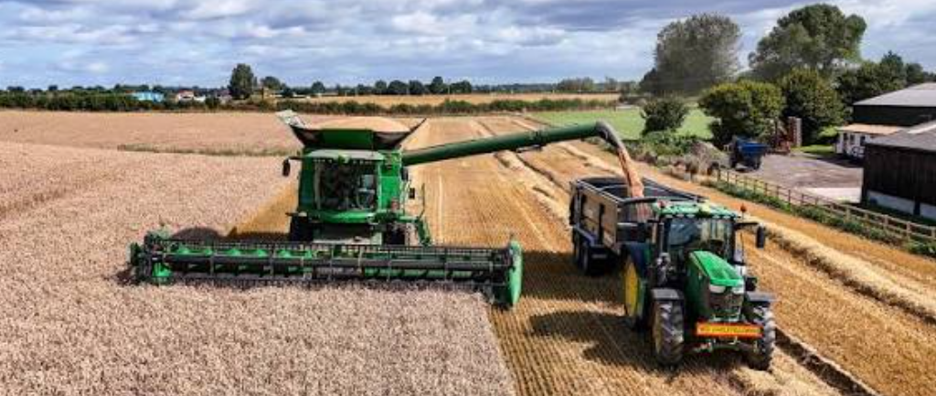
Harvest
It is the same in Karagwe, Tanzania. Farmers gather together, lacking tractors and implements, but each with a hoe, together they cultivate their fields by hand. It takes a two dozen people a week or more to prepare one-half acre of land for planting. Indeed, Farmers helping farmers.
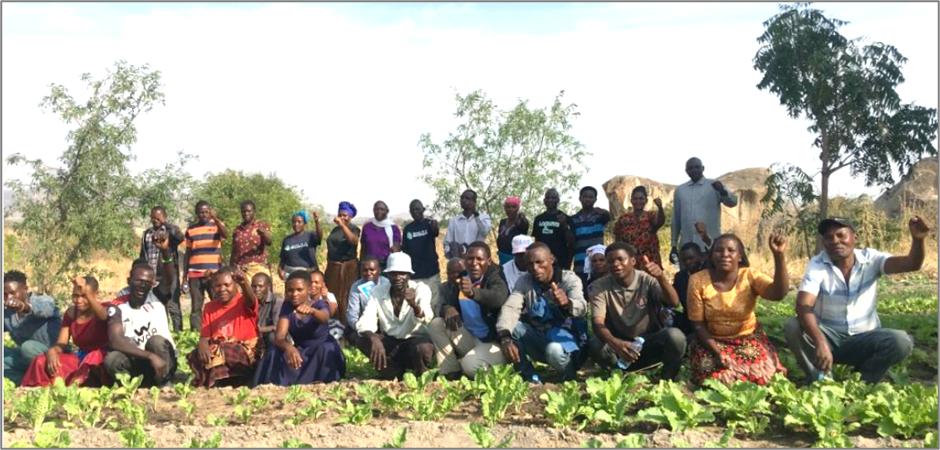
Farmers helping farmers.
Jan and I recently visited Southern Minnesota and remarked on our history. The Dakota people of Southern Minnesota were the first to practice a seasonal, sustainable form of agriculture based upon corn, beans and squash. Before the 1851 Treaties of Mendota and Traverse des Sioux that forced the Dakota onto reserved narrow lands along the river, they led a balanced life of harvest, maple sugaring, and hunting. The U.S. Government then gave their land to others whose European-American methods reshaped farming in this area. As part of this, Jan’s family came from Sweden, Scotland and Wales, and two generations of Bergquists farmed a quarter section in Southern Minnesota.
On our drive, we also noticed how lush everything looked. Corn growing well above our heads, and tidy fields of soybeans as far as you could see. We have so much bounty in our fields that we sometimes forget that it isn’t always this way. Farmers around the world know the possibility of droughts, dust bowls, and lost topsoil; floods that wash away crops and insects that ravage whole fields prior to harvest. Living off the land is not easy or guaranteed. This holds true for our farmer friends in Tanzania.
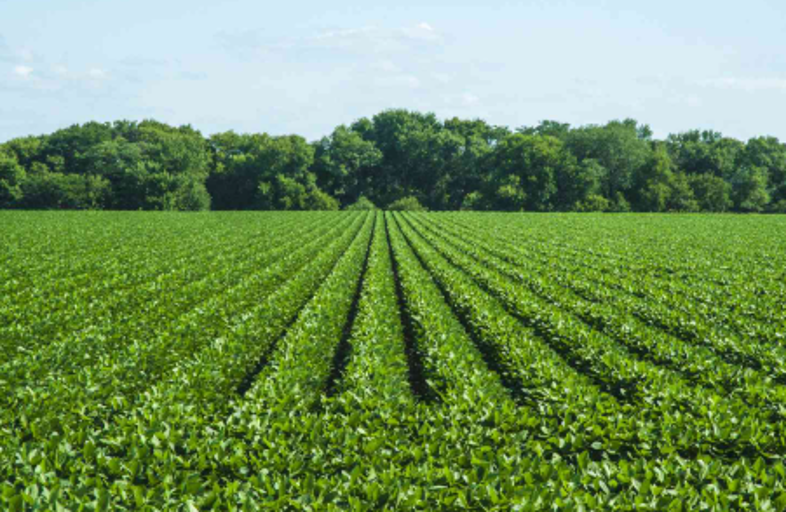
Lush fields of Southern Minnesota
I am so proud of ETI’s family of donors who are helping lift an entire generation out of rural poverty by giving some of their own bounty. How proud are you when you give from yours? What seeds can you sow in your children or grandchildren when they learn how you help Tanzanian school children get fresh and wholesome pineapple juice into their diets?
FURSA is the Swahili word for “Opportunity”. Our Tanzanian partners have named this endeavor “FURSA” and are claiming the success that will result when the vision becomes reality as it is unfolding now. Join us.
Please, come along with us as we see building a food processing plant - Project FURSA - come to its completion. Every bit helps.
Even the amount we spill.
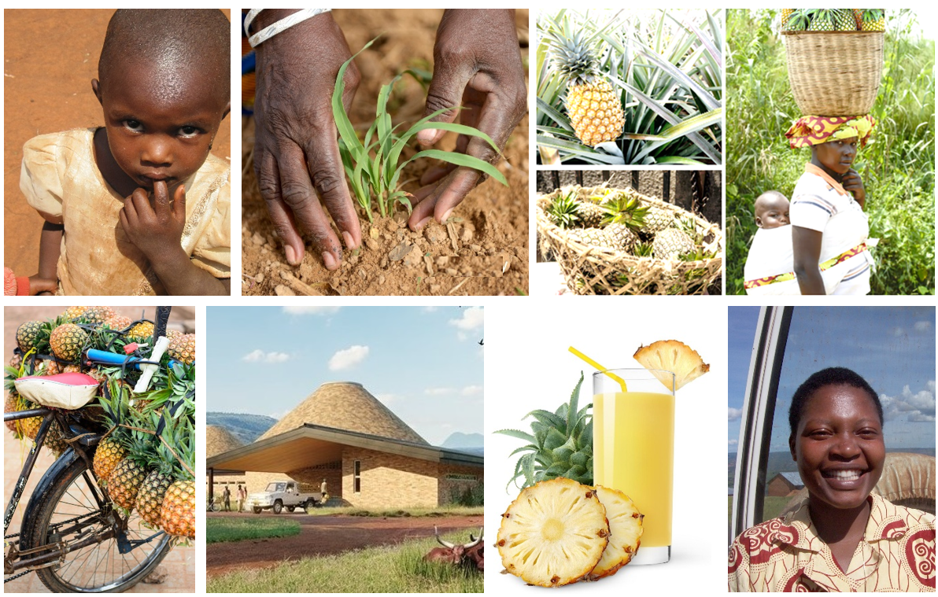
People in remote Tanzania need food processing. Let’s help them build.

Contact Educate Tanzania for more information. Scan or click here.
